

Cellular shades and roller shades can both look clean, filter light and use motorized controls. Their construction is fundamentally different. Cellular fabric forms insulating pockets and compresses into pleats. Roller fabric stays flat and wraps around a tube. That difference affects comfort, stack, cleaning and design.
The short comparison
| Decision | Cellular shade | Roller shade |
|---|---|---|
| Construction | Folded air pockets | Flat fabric on a tube |
| Comfort emphasis | Insulating layer near the glass | Solar control depends strongly on fabric |
| Raised appearance | Compressed fabric stack | Fabric wraps onto the roll |
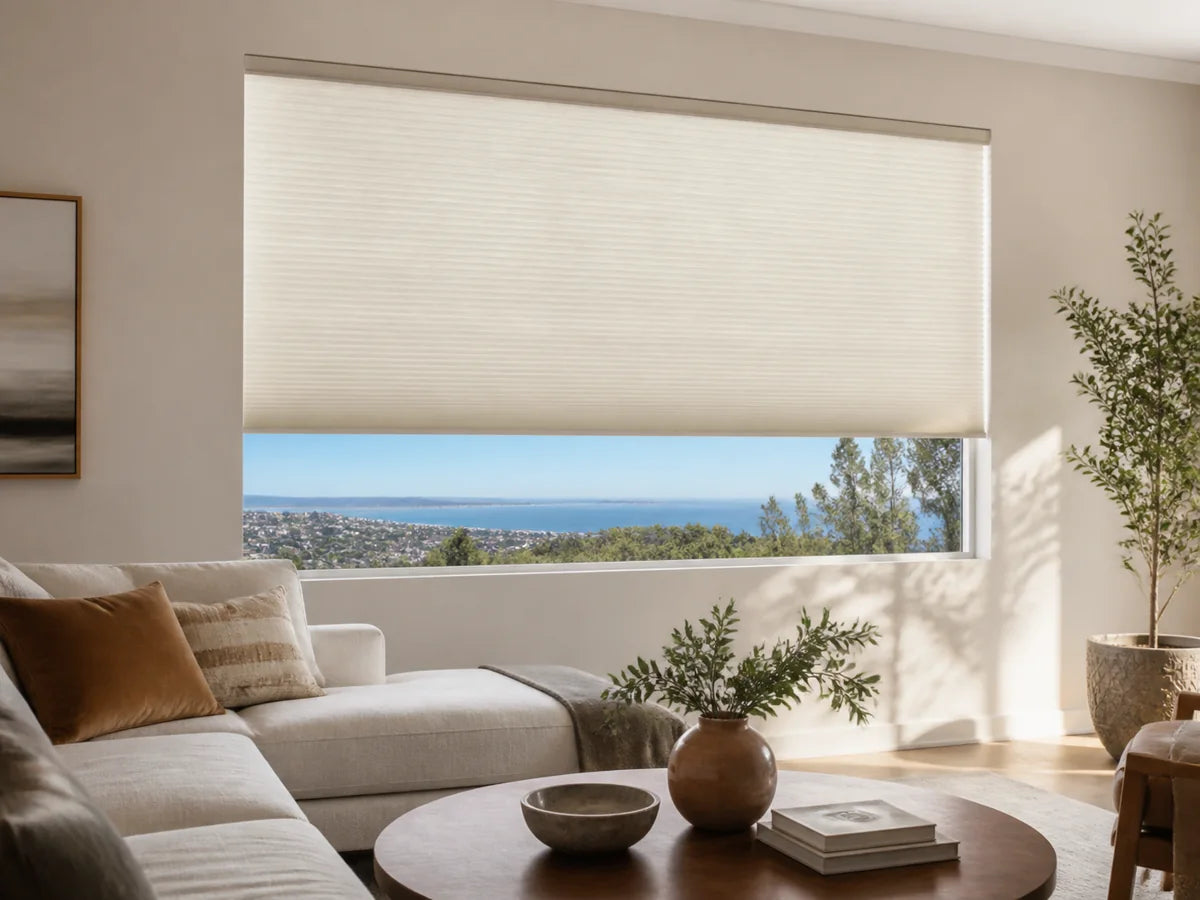
| Visual texture | Horizontal pleats | Quiet continuous plane |
| Top-down option | Common in selected systems | Less typical and product-specific |
| Cleaning | Pleats and internal cells | One main flat surface |
Choose cellular when window-area comfort is the priority
Cellular pockets resist air movement through the shade and create separation from the glass. In a room where people sit close to a hot or cool window, that can improve perceived comfort while the shade is closed.
The shade does not repair a drafty frame, failed seal or inefficient window. Fit and operating schedule matter. A large side gap allows more room air behind the shade, while a raised shade removes most of the insulating layer.
Choose roller when a quiet fabric plane is the priority
A roller shade is visually direct. When lowered, it becomes one uninterrupted surface. When raised, most fabric wraps around the tube. This suits modern rooms where the treatment should not add repeated pleats.
Roller fabrics also span a wide performance range: solar weaves for view and glare, light-filtering textiles for diffuse daylight and opaque fabrics for darkness through the face. The material selection carries more of the performance burden.
Light filtering looks different
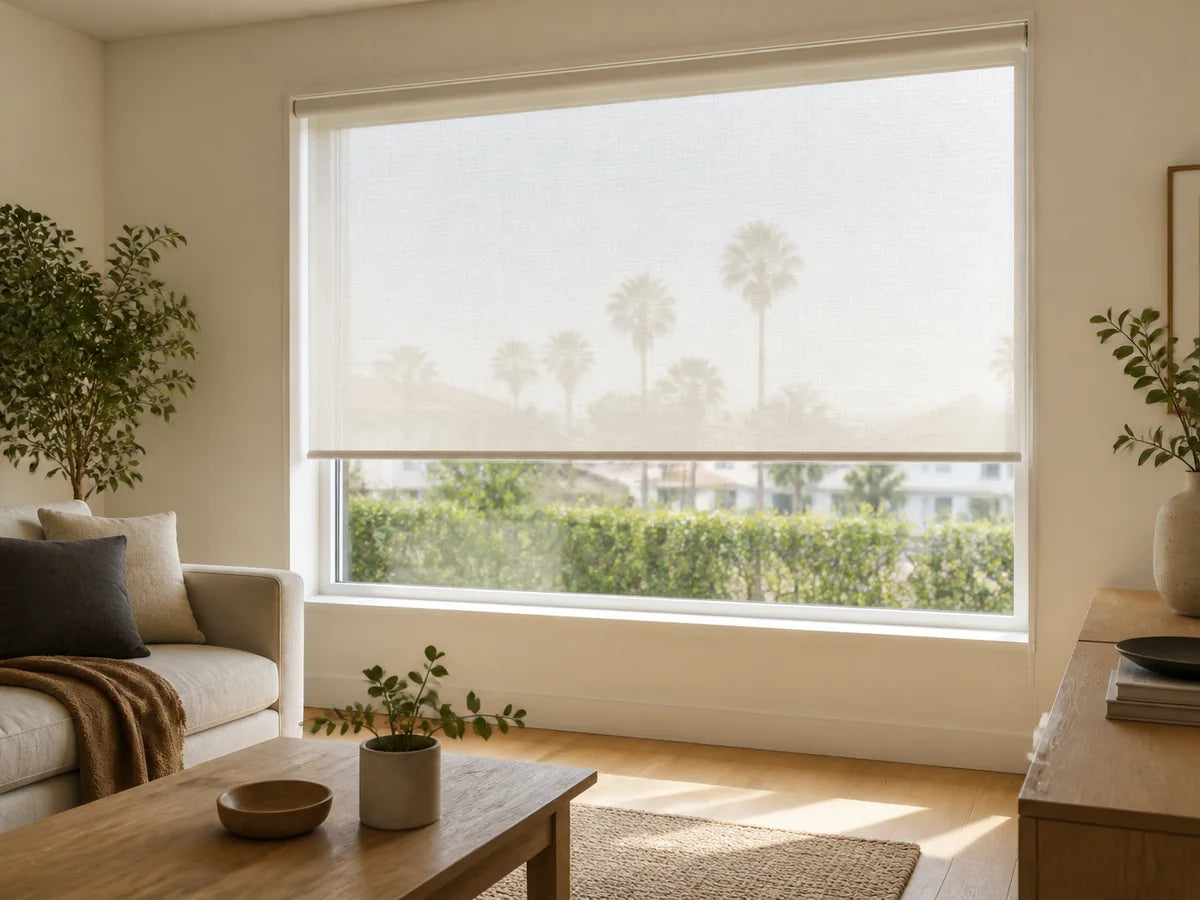
Light-filtering cellular fabric breaks daylight across its pleated structure. The folds can create alternating highlights and shadows. Light-filtering roller fabric presents a flatter glow, revealing texture and color across one plane.
Neither label states a fixed privacy level. Hold the physical sample against the window during the brightest problem hour. Then test it after dark with interior lights on.
Both can use blackout fabric, but edge gaps remain
Blackout cellular shades often contain a more opaque inner layer within the cells. Blackout rollers use opaque flat fabric. Both can block light through the material while leaving brightness around the perimeter.
For strong room darkening, outside-mount overlap, drapery or a purpose-built edge system may matter more than whether the fabric is pleated or flat. Read the blackout and light-gap guide before approving a bedroom.
Raised stack changes the view
Cellular fabric compresses beneath the headrail. The stack height increases with shade height, cell construction and fabric. A roller gathers onto a tube, making the roll diameter larger as the shade rises.
Both systems occupy glass or projection space in different ways. Ask for finished headrail dimensions and expected raised profile for the actual size. A sample book cannot answer that question.
Top-down privacy favors cellular systems
Selected cellular products can lower from the top while keeping the bottom covered. This is useful for bathrooms, street-facing rooms and close-neighbor windows where sky light is welcome above eye level.
Standard rollers travel from the bottom up and do not naturally create the same top opening. Specialized configurations may exist, but do not assume this function from a typical roller quote.
Rollers offer a clearer solar-view option
Solar roller fabrics use an open weave to reduce glare while preserving some outward view. Cellular shades do not provide the same broad see-through mesh effect because their pockets and internal construction diffuse or block the view.
For an ocean-facing or city-view room, compare the comfort value of cellular with the view value of solar roller fabric. The correct choice may differ by elevation and orientation.
Cleaning is simpler on many rollers
A flat roller offers one primary surface for approved dusting. Cellular shades have pleats plus open cell ends that can collect dust or small insects. Cleaning methods vary by textile and should follow the manufacturer’s instructions.
Do not crush cellular pleats or insert tools into cells. Do not scrub coated roller fabric. In kitchens, near frequently opened doors or in high-dust rooms, maintenance access deserves extra weight in the decision.
Wide windows introduce different limits
A wide cellular shade increases rail length, fabric weight and lift load. A wide roller increases tube deflection risk and roll diameter. Manufacturers respond with different rails, tubes and size limits.
Multiple shades can improve serviceability but create gaps. One large shade can preserve continuity but may require heavier hardware. Use the extra-wide shade planning guide before deciding.
Motorization works well on both when properly sized
A motorized cellular shade lifts a compressing fabric stack. A motorized roller turns a tube. Both require a motor selected for the actual width, height and fabric weight.
Cellular top-down bottom-up operation may need more specialized controls. Roller systems often offer straightforward upper, lower and favorite positions. Smart-home compatibility belongs to the exact motor and bridge, not to the shade style alone.
Room-by-room starting points
Cellular often fits
Bedrooms, nurseries, street-facing bathrooms and seating areas where temperature near the glass is uncomfortable.
Roller often fits
View rooms, home offices, large modern windows and spaces that need a quiet continuous surface.
A whole home does not need one style everywhere. Keeping cassette colors and control logic consistent can unify different treatments.
Ask these questions before choosing
- Is the main problem heat transfer, direct sun, glare, privacy or appearance?
- Do you want a see-through solar option or a fully obscured view?
- How much raised stack can remain over the glass?
- Would top-down privacy change how the room is used?
- How easy must routine cleaning be?
- Does the window exceed standard motor or hardware limits?
Questions homeowners ask
Which is more energy efficient?
Cellular construction is specifically designed to add insulating air pockets. Actual results still depend on fit, window, cell construction and operating behavior.
Which looks more modern?
Both can. Rollers look flatter and quieter. Cellular shades add repeated horizontal pleats and more textile depth.
Which is better for a view?
A solar roller usually preserves a broader outward view. Cellular shades obscure the view when lowered.
Which is better for blackout?
Both offer opaque materials. The installed darkness depends heavily on mounting and edge gaps.
Can both use voice control?
Compatible motor systems may connect to voice platforms. Confirm the exact motor, bridge and supported ecosystem.
Blinds100 serves South Bay homes within roughly 15 driving miles of Harbor City. Availability is address-dependent near the edge of the service area.
Read the cellular shade guide, review the roller shade guide or book a free measurement.